
Daggerheart IS Framing

There’s lot of debating about the matter, but as I stated in many occasions and previous articles, FRAMING is the quintessential ingredient to make a DH campaign work.
And I’ll say more: to me, DH without a campaign frame doesn’t even work (and to be completely fair, it’s currently my favorite game)
It feels harder to explain than it actually is: you can definitely play a Forgotten Realms campaign in DH, sure… But it won’t be as impactful as a NEVERWINTER chronicles.
And there are concrete reasons for this.
STRONG PITCH
You can play DH in space, in west marches style, in old weird west, whatever; the core principles are the same
• it’s heroic
• it’s a beat by beat, PC centric story
• it’s about specific ways of handling character AND world concepts
All mechanics in DH point towards the same direction: easy re-flavouring and story changing bits you use to model unexpected twists with a constant spotlight shift.
Now, imagine a wide world campaign with no concrete direction or pitch; your first challenge will be answering the core questions.
What’s important for you? Why do you care about your town? What the Lich King took away from you?
That can can only come from heavy pitching.
Furthermore, a solid pitch will dramatically increase purpose and belonging. Your people, your place, your role, even your attachment to the land.
A good pitch can be as wide as you can but must have boundaries.
You are still part of the bigger picture, but you truly care about your spot. That’s how you focus. That’s how you play solid battles, environments and choices.
FOCUS
As above, strong frames help the players focus on important things and they can really discuss about even smaller parts they care about, giving you, the GM, a plethora of info you will add to your notes as hooks.
You all love that 45 minutes long lore explanations, but nope, you don’t need it. Show don’t tell.
Tell them you live in a world where the mists cover most of the landscape.
Tell them how the dark lord kidnaps people during the night and that he wears a clear mark of his past knighthood.
This tells a lot more than complex stuff they will rightfully forget in minutes.
Beware: this DOESN’T MEAN you must make things up as you go. Your frame is a frame, is a pitch with hooks, NPCs, places, ideas.
The key factor is that all those pieces will move around reactively and might change their minds or have a moment of clarity (maybe the dark lord will show his knighthood by saving a child from a trap, showing a bit of his mercy).
Pitching will allow you to give HUGE strength to details rather than macro events.
MECHANICAL OVERKILL
Players love making their rules. It’s legit and mostly useless, UNLESS they have a solid guideline… Guess what? THE PITCH.
You might think that you need special rules for firearms just because you are framing a space opera scenario; but you will mostly likely won’t need any firearm.
Reskinning will be enough.
But let’s say you want to emphasise the feel of a species that is only vulnerable to magic plasma, then you might cook something up: it should be simple and spot on.
The Foul Guardians are resistant to all forms pf damage, besides magic plasma, which halves their damage threshold.
This frame clearly points towards a specific ruling you MIGHT add: and nope, it’s not a list of plasma based weapons.
It’s probably how plasma is stored and used; it’s about an interesting seed:
• What the heck is magic plasma?
• How can I use it?
It might be tied to specific Environments (hook), requiring special treatment (downtime activity spotted!) and being very quick to go (uses emotions, so mark stress upon use).
This is what framing will lead to:
• solid questions…
• …with worthy answers!
ANY WORLD, RESIZED
So, it’s all about framing, pitching, finding the right size for the tale.
There are no limits; reskinning is easy, pitching is fun and leads to holes to be filled. Most importantly it gives the whole thing a manageable size.
It’s about a lot of details that will make the experience feel Daggerheart-ish.
• the heroes will more likely feel part of the whole
• mechanics will only emphasise what’s relevant
• you’ll perceive and automatically adapt any game element to the pitch
• you’ll pull out the assumed anime / tv series concept the game is built for.
As I wrote in the past about the “system matters”, I often use opposing forces to emphasise particular elements (such as using combat focused games to tell dramatic stories - DH is not an exception); but sometimes, we forget how games are just that. Games have rules and mindsets.
Daggerheart is a game that is written with the idea of you embracing framing, quickly share a vision and quickly jump into it.
You can certainly expand a frame, but I highly recommend to keep it as simple and small as you can: I currently play two games set in Krevborna. One is about hunters blackmailed and working for the Church; another is about investigating vampire matters.
Krevborna can be as vast or small as you please, but the actual campaign frames have concrete objectives, feelings and distinguishable features, leading to characters, styles and adaptations naturally flowing from the frame and the game itself.
DH offers all the tools you need to bend your idea and viceversa: you don’t need to play your usual self-condescend lore as per the middle school trends.
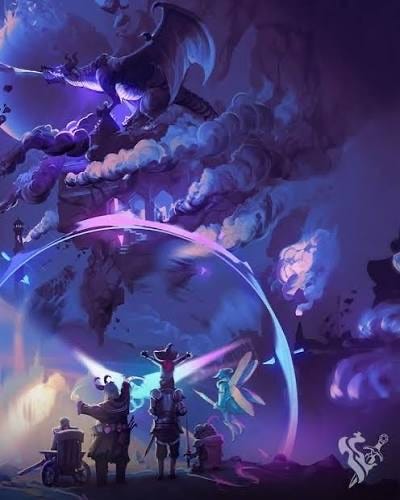
Furthermore, I firmly believe that Daggerheart is not a game for long campaigns, but it’s for sure a game built for epic mid range story arcs.
You can connect frames (I play withterwild in the same universe of other two campaigns) if you like, but I highly recommend to try this approach:
• keep it simple. One sentence must be able to define the frame
• keep it manageable. A few notes, lots of prompts and a few links
• leave spaces. To do this, don’t build worlds in the traditional manner
• don’t try to do epics. Just PLAY epic stories in you pocket sized universe.
• Be mindful with mechanics.
Next time I’ll delve a bit more into framing and notes management for a simple and deep DH experience!
Aloa!
TSM